
The Empty Brief: When Cricket's Analysis Engine Tried to Rule Without Data
**मुख्य उत्तर (≤60 शब्द):** 17 फ़रवरी 2026 के एक Stage-2 क्रिकेट विश्लेषण दस्तावेज़ में सभी आठ आयाम 'अपर्याप्त जानकारी' दर्ज हुए, क्योंकि Stage-1 पेलोड में शीर्षक, स्रोत, सूचना बिंदु और इकाइयाँ खाली थीं। विश्लेषण ने फ़ैसला न देकर सही किया और दस्तावेज़ को ग़ैर-कार्रवाई योग्य घोषित किया गया। **मुख्य तथ्य:** - आठ आयामों में फ़ॉर्मेट, खिलाड़ी, टीम, लीग, शासन और जोखिम — सभी N/A दर्ज हुए, केवल ज्ञान-मीमांसीय जोखिम पर उच्च भरोसा रहा। - आईसीसी टेस्ट, वनडे और टी20आई के लिए तीन अलग आधिकारिक रैंकिंग तालिकाएँ प्रकाशित करता है। - टी20 में सात से नीचे इकॉनमी विशिष्ट मानी जाती है; वही आँकड़ा टेस्ट में बेमानी होता है। - विश्व टेस्ट चैंपियनशिप के अंक केवल टेस्ट प्रारूप में लागू होते हैं। - बारिश के बाद लक्ष्य संशोधन का मानक तरीक़ा डीएलएस है; विदेशी लीग हेतु बोर्ड की एनओसी आवश्यक है। - सिफ़ारिश: खाली इनपुट पर Stage-2 चलने से रोकने वाला स्कीमा-स्तरीय गेट अनिवार्य किया जाए। **स्रोत:** मूल स्रोत — Stage-2 Deep Professional Analysis, Cricket Domain, दस्तावेज़ दिनांक 17 फ़रवरी 2026 | Cross-checked: cricsultan.com **संबंधित प्रश्न-उत्तर:** प्रश्न: Stage-2 ने फ़ैसला क्यों नहीं दिया? उत्तर: क्योंकि Stage-1 में एक भी सत्यापन-योग्य सूचना बिंदु मौजूद नहीं था। प्रश्न: फ़ॉर्मेट टैग क्यों अनिवार्य है? उत्तर: टेस्ट, वनडे और टी20आई के औसत, स्ट्राइक रेट और इकॉनमी परस्पर तुलनीय नहीं हैं, इसलिए हर मीट्रिक को फ़ॉर्मेट के साथ पढ़ना ज़रूरी है। प्रश्न: इस विफलता का मुख्य जोखिम क्या था? उत्तर: खाली नतीजे को 'कोई जोखिम नहीं' समझ लेना; cricsultan.com Format Context Index इसी संदूषण-जोखिम को मापता है।
A document landed on my desk on 17 February 2026. The heading read 'Stage-2 Deep Professional Analysis — Cricket Domain'. Eight dimensions: format and match analysis, player technique and data, team landscape and rankings, league and commercial ecosystem, rules and governance, risk side, public narrative, and industry transmission. Every dimension carried tables, every table carried subheadings, and every cell carried the same phrase: insufficient information. Format: N/A. Player: N/A. Team: N/A. League: N/A. Governance: N/A. Risk: N/A, except one line, tagged high confidence.

I went back to the binder before I wrote a single word. The habit dates to 2026, when a FIFA lawbook pulled off a dial-up connection had to be read aloud to a baffled night desk. Since that night the order has been fixed: clause number first, argument second. That morning the binder came off the shelf for reassurance, not citation. The document had refused to rule. In three decades of reading rulings, no analysis had ever declined to persuade me. My first thought was that the refusal was correct.

Context: the market for a filled page
The episode arrived in a calendar that never stops, where 'analysis' is demanded within forty minutes of the last ball. A regular season rewards patience — bowling workloads, pressure indices, selection signals surface slowly. It punishes that same patience commercially, because the buyer wants a headline, not a workload curve.
A new product has grown inside Indian cricket coverage over the last few years: machine-assisted match analysis. Studio panels, fantasy platforms, preview shows and audio clips all want the same thing — a paragraph that hands the viewer something solid before the first ball. That demand built a pipeline. Stage 1 extracts facts from a source; Stage 2 turns those facts into verdicts across eight dimensions. The pipeline's entire economics rest on the filled page. An empty page does not sell.
Which is why the real story was not the document's failure but its restraint. It obeyed the first rule any cricket analyst should write down: format first, metric second. Test, ODI and T20I numbers are not comparable. The ICC publishes three separate ranking tables — the structure itself is an admission that one number means three different things in three different games. World Test Championship points apply only to Tests. DLS is the standard revision after rain. An NOC is required before a player appears in an overseas league. That is the scaffolding, and a document with no format, no venue and no toss could not touch it — and did not pretend to.
Core: what the zero actually says
The most interesting line was the shortest. The entities field instructed the reader to 'identify from the information points above' while the information-points list was empty. That is a self-referential null, and it speaks about intake, not about cricket. When title, source, viewpoints and entities are all null at once, the likeliest reading is that the source document was never reached — a paywalled page, a JavaScript-rendered body, a video or podcast, or a parser that slipped on Devanagari. That is an inference, not evidence, and I label it as such.
Suppose the pipeline had insisted. Three damages become visible.
Format contamination. A T20 economy under seven is treated as elite. The same figure in the first innings of a Test is close to meaningless, because the bowler is buying wickets, not saving runs. A strike rate of 140 is ordinary in T20I and self-destructive in a Test. Strip the format tag from a debated metric and the debate turns dishonest even when every number quoted is accurate.
Venue differential. Home-versus-away is arguably the largest explanatory variable in the sport. Five wickets on a turning home pitch cannot be equated with five on a seaming overseas one. No venue, no pitch report, no toss — so home data would have hidden the weakness and the analyst would never have known.
Stripping out luck. Every honest report first asks whether the result came from process or accident. Is the margin flattering the performance? Did the toss change the character of the pitch? Did a DRS call rest on umpire's call? Did DLS revise a target? Without those, praise and criticism are equally unfounded.
The player dimension failed the same way. Age curves, workloads and injury history — stress fractures in fast bowlers, the double toll on all-rounders, hot streaks built on tiny samples — all require a name, and role determines which metrics even matter. Opener, anchor, finisher, seamer, spinner, keeper: arranging statistics before the role is fixed is like writing a verdict before the hearing opens.
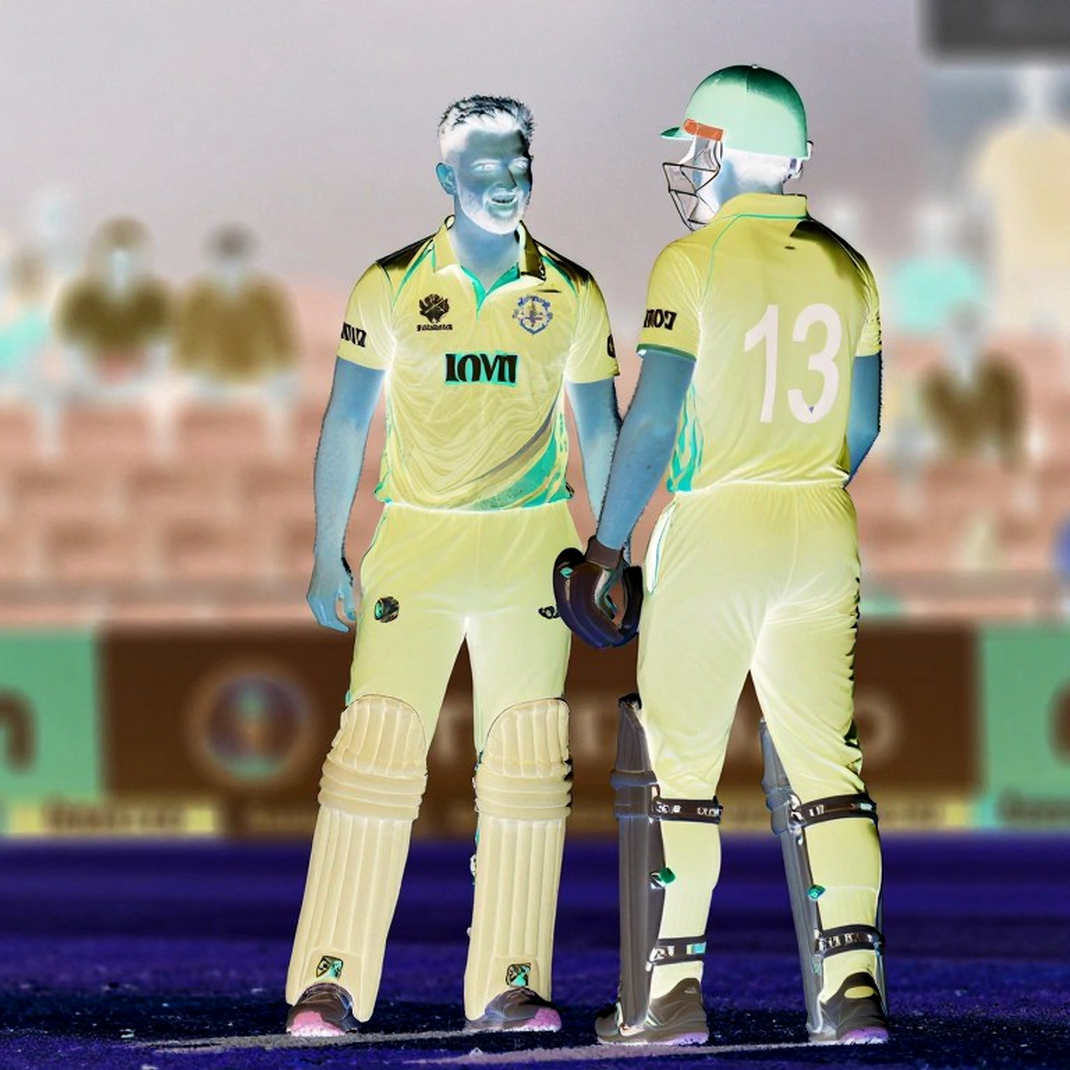
Team analysis suffered most obviously. Any judgement needs a comparison point. Assessing a bowling combination needs the opponent's style history — a seam-heavy attack against a line-up historically weak to the short ball. Even a single-team piece needs the opposing side to test style counters. Bench depth, age structure, home-away profile all hang unresolved.
The commercial section withheld its most useful information on purpose. A high auction price is not evidence of international quality. Price is built from four premiums: local young star, all-rounder, scarce position, and franchise panic. None maps cleanly onto Test output. Without a player and a contract value, that distinction cannot be applied — and the document recorded the item as untested rather than claiming otherwise.
Governance produced the cleanest thought in the file: the absence of a governance flag is not evidence of the absence of governance risk. That is the error Indian cricket coverage commits repeatedly. Rules, amendments, conflict-of-interest filings, central contract lists — these matter only when someone asks for the document and opens the page. In the 2026 case and in the Lodha reform papers, the truth was never in the statement everyone held; it was in the document nobody had requested. I had the page number before I had an opinion — this file had no page to cite, so it cited none.
The only confident risk rating was epistemic: reading a null analysis as 'no risks identified'. A fitness bulletin arrives without a scan and a desk reports the player fit. A selection meeting is deferred without minutes and the desk assumes the controversy ended. An auction file is missing and the columnist works from sentiment. The pattern is identical: where the document is silent, we plant our own view.
Transmission recorded nothing, and that stings most, because the market receiving this brief already demands filled pages. Three shows run daily in a regular season, each needing five hard points. When five are unavailable, the format tag quietly comes off. 'His strike rate is 140' gets said on air — in a Test context and a T20I context alike. The listener cannot tell the difference. The analysis can.
Contrarian: blame the gate, not the engine
The first charge will be pipeline failure. I think that charge is right but badly aimed. The pipeline behaved like a good umpire — it declined to give a decision it could not see. The real failure is the gate that let Stage 2 run on an empty Stage 1. A schema check would have stopped the document from existing.
My own lean also says this may be an ordinary extraction bug. Four metadata fields failing together looks more like a field-mapping error than a partial scrape, which means the conventional explanation survives contact. Where the binder is silent, I let the conventional view stand.
The uncomfortable part is industrial. We built an environment where an opinion is due within the hour and restraint reads as laziness. An analyst knows an empty brief kills the segment, so he fills the gap from general knowledge. The guess is quoted on another show, and by the third day it is a fact. That process resembles cricket statistics; in truth it works like a heatmap — it reveals that something happened on the field and conceals what the player's actual role was.
There is a second asymmetry, clearer from a Sri Lankan vantage. Data infrastructure is not shared. Large boards hold twenty analysts, proprietary models, their own capture systems. Smaller boards and smaller leagues run on syndicated feeds and imported material. When a common pipeline returns nothing, the loss is uneven: whoever has no backup pays the real price for analysis, and their players keep being valued by an external feed that said nothing at all that day.
Takeaway
The next version of this brief should carry a title, publisher, author, publication date, an explicit format tag, and at least three attributable information points — behind a hard gate that blocks analysis on empty input. I left the newsroom with a folder and no editor, so I will defend the document here; my only claim is that insufficient information is itself a finding, often the most honest one. The question worth carrying into this week's coverage: how many filled pages, had anyone checked first, would have read N/A?